MENU
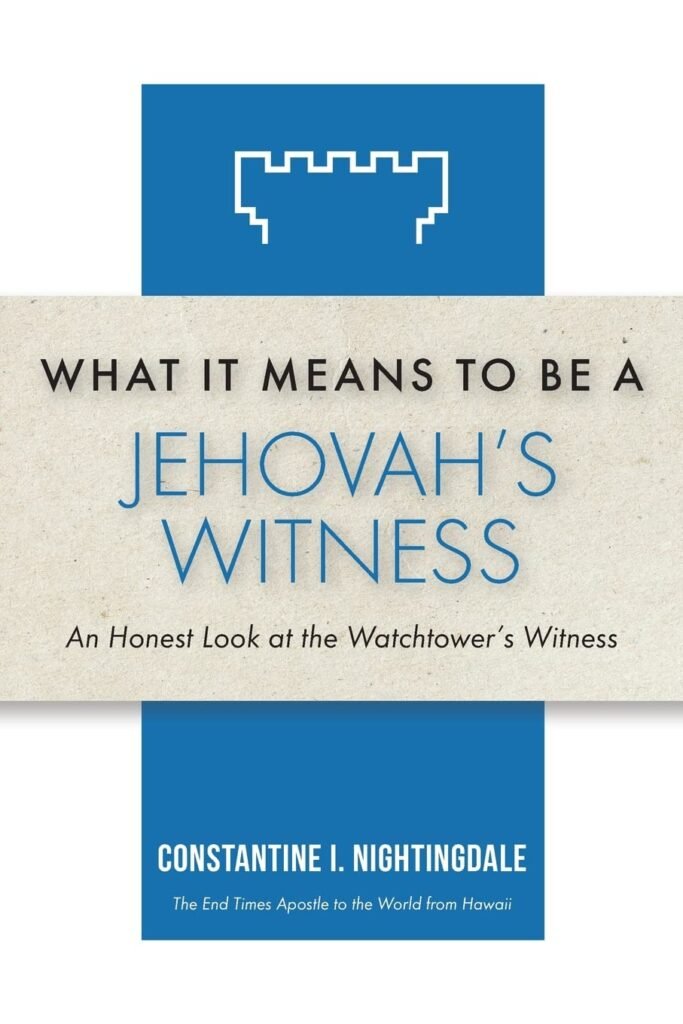
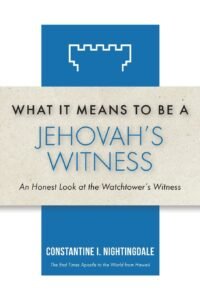
What It Means to Be a Jehovah’s Witness: An Honest Look at the Watchtower’s Witness
STORY SYNOPSIS
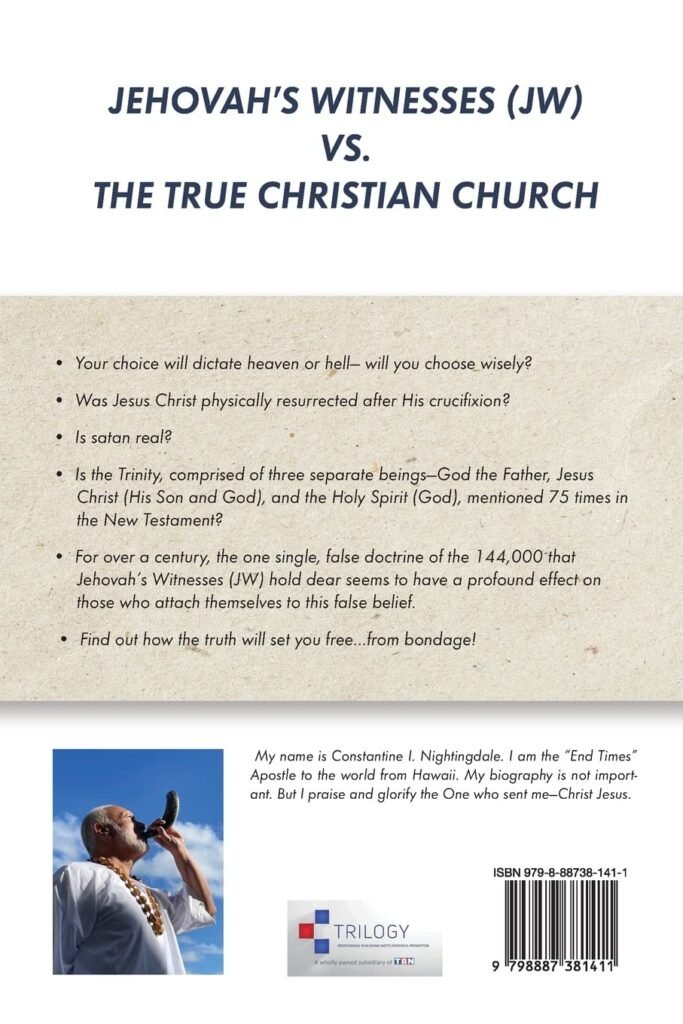
EHOVAH’S WITNESSES (JW) VS. THE TRUE CHRISTIAN CHURCH
- Your choice will dictate heaven or hell- will you choose wisely?
- Was Jesus Christ physically resurrected after His crucifixion?Is satan real?
- Is the Trinity, comprised of three separate beings-God the Father, Jesus Christ (His Son and God), and the Holy Spirit (God), mentioned 75 times in the New Testament?
- For over a century, the one single, false doctrine of the 144,000 that Jehovah’s Witnesses (JW) hold dear seems to have a profound effect on those who attach themselves to this false belief.
- Find out how the truth will set you free…from bondage!
Reviews:
BOOK DETAILS
Publisher: Trilogy Christian Publishing
Published Date: May 22, 2023
ISBN: 979-8887381411
Available Format:
Kindle
Paperback
Retailers:


Other Books From The Author