
MENU
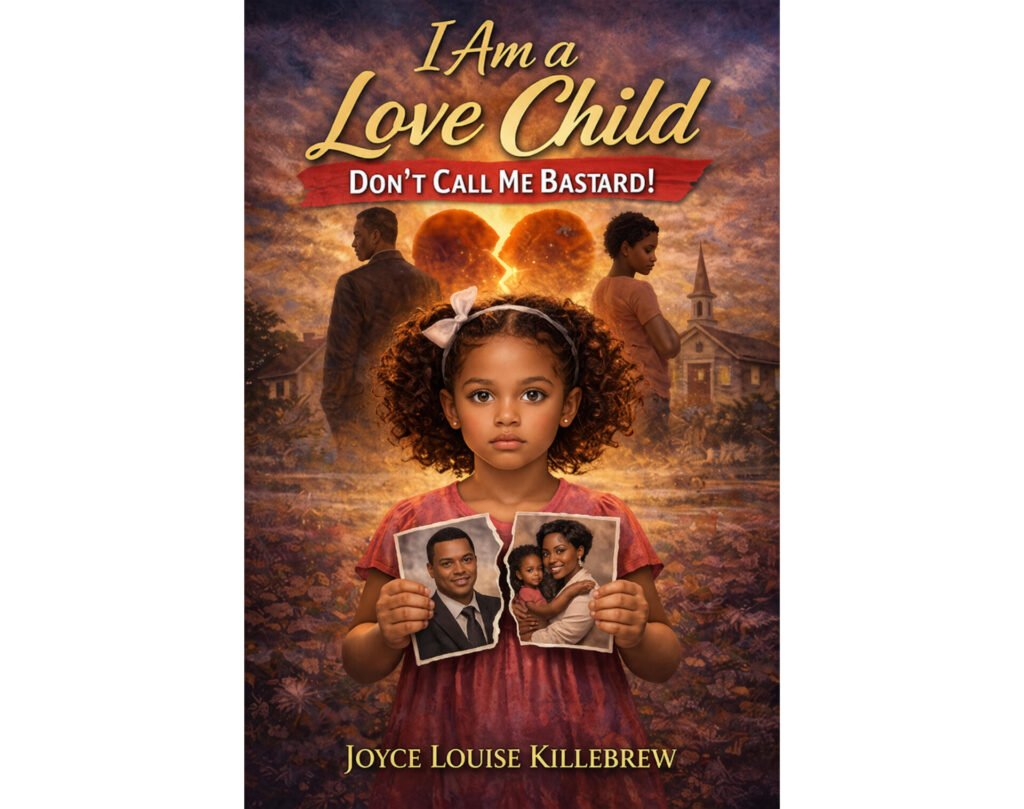
I Am ma Love Child, Don’t Call Me Bastard!
STORY SYNOPSIS
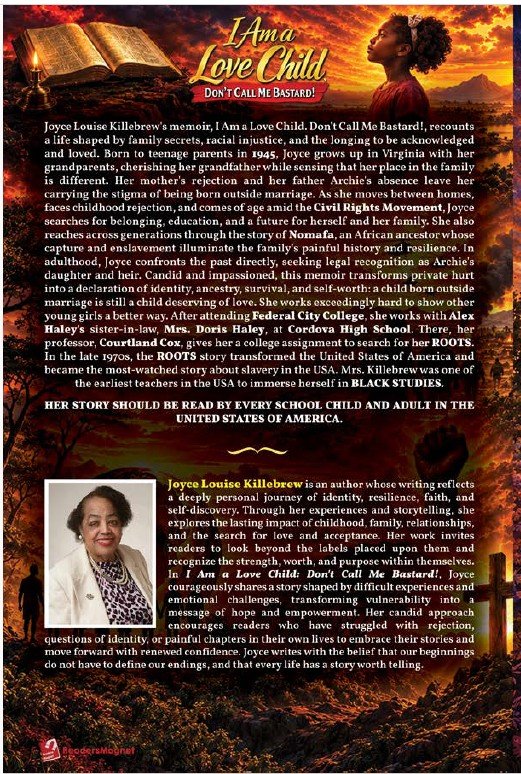
Joyce Louise Killebrew’s memoir, I Am a Love Child. Don’t Call Me Bastard!, recounts a life shaped by family secrets, racial injustice, and the longing to be acknowledged and loved. Born to teenage parents in 1945, Joyce grows up in Virginia with her grandparents, cherishing her grandfather while sensing that her place in the family is different. Her mother’s rejection and her father Archie’s absence leave her carrying the stigma of being born outside marriage. As she moves between homes, faces childhood rejection, and comes of age amid the Civil Rights Movement, Joyce searches for belonging, education, and a future for herself and her family. She also reaches across generations through the story of Nomafa, an African ancestor whose capture and enslavement illuminate the family’s painful history and resilience. In adulthood, Joyce confronts the past directly, seeking legal recognition as Archie’s daughter and heir. Candid and impassioned, this memoir transforms private hurt into a declaration of identity, ancestry, survival, and self-worth: a child born outside marriage is still a child deserving of love. She works exceedingly hard to show other young girls a better way. After attending Federal City College, she works with Alex Haley’s sister-in-law, Mrs. Doris Haley, at Cordova High School. There, her professor, Courtland Cox, gives her a college assignment to search for her ROOTS. In the late 1970s, the ROOTS story transformed the United States of America and became the most-watched story about slavery in the USA. Mrs. Killebrew was one of the earliest teachers in the USA to immerse herself in BLACK STUDIES.
HER STORY SHOULD BE READ BY EVERY SCHOOL CHILD AND ADULT IN THE UNITED STATES OF AMERICA.